- Advocacy
Christians of Syria: between uncertainty and hope
L’Œuvre d’Orient has published a report assessing the situation of Syrian society and the Christian community in Syria since the start of the war in 2011, and makes recommendations to the international community.
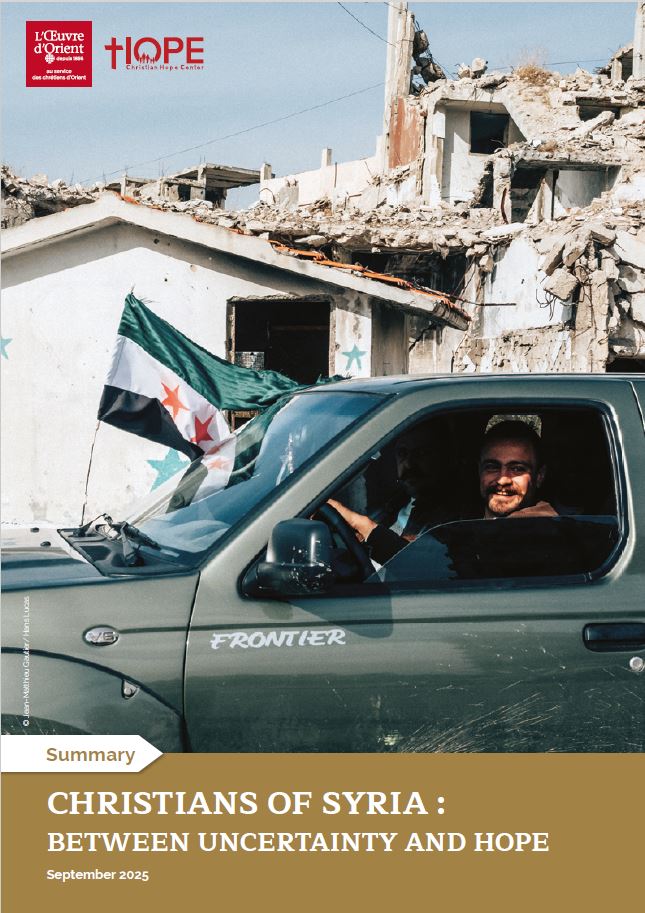
Since 2011, Syria’s Christian community has been going through an unprecedented crisis. More than 80% of its members have left the country; those who remain, like the rest of the population, are experiencing profound social decline, marked by fear and constant insecurity. Yet despite their fragile situation, Christians continue to serve others tirelessly: through their four large hospitals, 57 schools scattered throughout the country, and dynamic community organizations, they help support the population, following the example of the Hope Center Syria, which supports young people and helps them return to work.
Our recommandations
Religious and ethnic pluralism is one of Syria’s greatest assets. The well-being of all its ethnic and religious communities is one of the conditions for peace and a key factor in the level of freedoms. The crucial issue of protecting minority rights to ensure stability and prevent conflict is mentioned in numerous UN reports. However, after half a century of dictatorship, fourteen years of war and post-Assad communal violence, this religious and ethnic diversity has been considerably weakened and threatened in Syria. Yet, it appears that current aid and protection instruments at the European and international level do not take sufficient account of the vulnerability and fragility of this ecosystem.
Accordingly, L’Œuvre d’Orient recommends to:
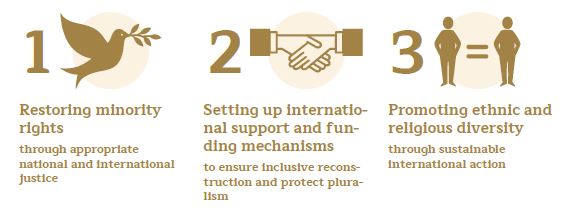
• Establish mechanisms to support reconciliation and justice tailored to all Syrians;
• Set up international mechanisms and funding to ensure inclusive reconstruction;
• Mobilize the international community in a sustained manner to promote ethnic and religious diversity in Syria.
=> In particular, we promote the creation of a dedicated fund to support ethnic and religious diversity and a national platform for inter-community dialogue.
📄 To go further
These various national and international instruments could also be supported by various United Nations agencies and European Union. Far from promoting communitarianism, these initiatives would support political transition and anchor these minorities within the societies in which they live, thereby ensuring stability in these countries while strengthening respect for human rights for all.